

Lactose intolerance is one of the most common digestive conditions in the world. It happens when the body doesn’t produce enough lactase, the enzyme needed to break down lactose (the natural sugar in milk) into the simpler sugars glucose and galactose.
When lactose isn’t broken down, it travels undigested into the large intestine, where gut bacteria ferment it and produce gas, leading to symptoms like bloating, abdominal cramps, flatulence, and diarrhea.
If any of that sounds familiar, the good news is that lactose intolerance is very manageable. Below, we cover whether it can appear later in life, which foods work well, what an everyday eating plan can look like, and the two main approaches to treatment.
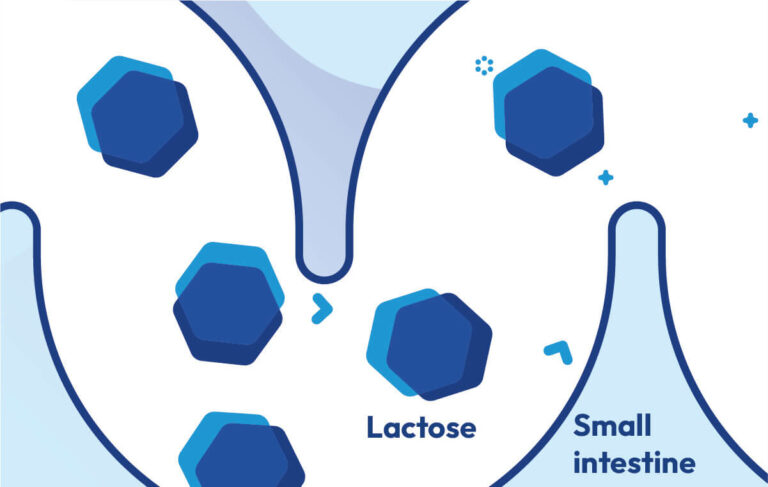
Lactose is the milk sugar that is naturally present in milk. This disaccharide is composed of the two monosaccharides glucose (grape sugar) and galactose.
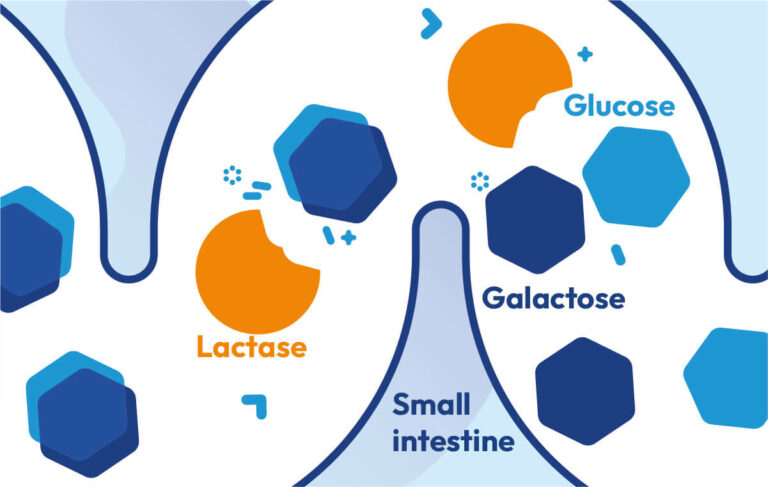
Lactase is an enzyme present in the small intestine that breaks down lactose. The body cannot utilize lactose, but the two simple sugars it contains, glucose and galactose, can.
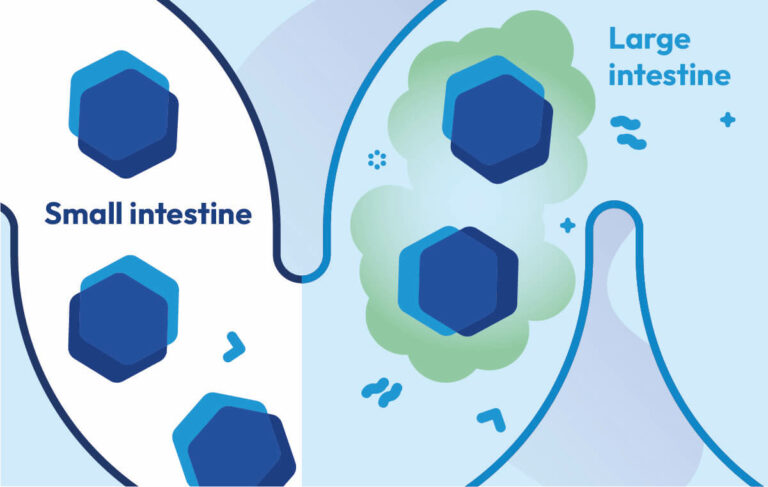
If lactase is insufficient or not present at all, the undigested milk sugar reaches the large intestine, where it is fermented by intestinal bacteria, producing gas, which can then lead to symptoms.
The symptoms caused by lactase deficiency include
If the symptoms mentioned occur after consuming dairy products, it may be a case of lactose intolerance (milk sugar intolerance). Due to the similarity of the symptoms, lactose intolerance is often confused with irritable bowel syndrome (irritable colon). Your doctor will be able to help you clarify the situation or answer any questions you may have.

Yes, and in fact this is the norm rather than the exception. Almost all babies produce plenty of lactase so they can digest breast milk. For most people, lactase production naturally declines after childhood because, genetically speaking, the enzyme is no longer “needed” once weaning is over. This gradual decline is called primary lactase deficiency, and it’s the most common form. It explains why many adults who drank milk freely as children start noticing discomfort with dairy in their twenties, thirties, or later. Worldwide, an estimated 70–90% of adults have some degree of reduced lactase activity.
There’s also a second route to developing it later in life: secondary lactase deficiency. This can appear after an intestinal illness or event that damages the lining of the small intestine, such as a gastrointestinal infection, celiac disease, or Crohn’s disease. Because the cells that produce lactase sit on that lining, temporary damage can reduce enzyme output. The encouraging part is that secondary lactose intolerance often resolves once the underlying condition is treated and the gut lining heals.
And there is also a third type of lactase deficiency: Congenital lactase deficiency. This form of deficiency occurs very rarely. It is due to a genetic defect which means that the body cannot produce lactrase in the small intestine. In this case, infants must be fed a strictly lactose-free diet.
Because the symptoms of lactose intolerance overlap heavily with other digestive issues, such as irritable bowel syndrome, it’s worth confirming the cause rather than guessing. A doctor can arrange a hydrogen (H2) breath test or a blood sugar test to determine whether lactose is actually the trigger. Getting a clear answer helps you decide how strictly to manage dairy, rather than cutting out foods unnecessarily.
A lactose load test can be used to determine whether a lactase deficiency is present. This involves drinking lactose dissolved in water (approx. 25 – 50g) on an empty stomach. Breath samples (H2 breath test) or blood samples (blood sugar test) are then taken at regular intervals over 2-3 hours.
If there is a lactase deficiency, the lactose supplied is not or not completely broken down in the small intestine. From there it reaches the large intestine, where it is broken down by large intestine bacteria to form hydrogen (H2). The resulting hydrogen is absorbed via the intestinal wall and then enters the lungs via the bloodstream, from where it is exhaled. The hydrogen content of the exhaled air can therefore be used to determine whether lactose, which has not been broken down in the small intestine due to a lactase deficiency, has reached the large intestine.
This test is used to determine whether the lactose supplied has been broken down by sufficient lactase in the small intestine. If this is the case, the blood sugar level rises as the glucose released during the breakdown passes through the intestinal wall into the blood. However, if there is a lactase deficiency, the breakdown of lactose in the small intestine is impaired and the blood glucose level does not rise or only rises slightly.
Both the H2 test and the blood glucose test are usually carried out by specialists in internal medicine and gastroenterologists.
During the genetic test, the doctor takes a swab of the buccal mucosa. This is sent to a specialized and certified laboratory for examination.
The genetic test provides information on whether you will develop a primary lactase deficiency in the course of your life, but not on whether this deficiency is already present. This can only be determined with the lactose load test described above.
A helpful thing to understand early is that lactose intolerance is rarely all-or-nothing. Most people can tolerate a certain amount of lactose, and the amount varies from person to person. That means the goal is usually to find foods that fit within your personal threshold, not to fear every dairy product on the shelf.
Many naturally low-lactose or lactose-free foods are easy to enjoy. Hard and aged cheeses such as cheddar, parmesan, and gouda contain very little lactose because most of it is removed or broken down during production. Butter and cream are also relatively low in lactose. Fermented products like plain yogurt and kefir are often better tolerated too, since the live cultures help break down some of the lactose. Beyond that, all foods that never contained lactose in the first place are naturally fine: fruits, vegetables, grains, meat, fish, eggs, nuts, and legumes.
For direct milk replacements, there’s a wide selection of plant-based drinks made from soy, oat, almond, or rice, as well as lactose-free versions of regular milk, yogurt, and cheese in which the lactose has already been split for you. These let you keep the taste and texture of dairy without the digestive fallout.
The foods most likely to cause trouble are those high in lactose: fresh milk, buttermilk, cream-based sauces, milk chocolate, ice cream, and soft fresh cheeses. It’s also worth reading labels, since lactose is sometimes added to processed foods like baked goods, sauces, processed meats, and even some medications. Checking ingredient lists for milk, whey, milk solids, or lactose helps you avoid hidden sources.
There’s no single official “lactose intolerance diet”, and that’s actually good news, because it means you can build an approach around your own tolerance rather than following rigid rules. The most widely recommended strategy is a personalized, moderate one: reduce lactose enough to stay symptom-free, but don’t eliminate more than you need to.
A practical way to start is with a short trial period of low-lactose eating to let symptoms settle, followed by gradually reintroducing dairy foods to learn your personal limit. Many people discover they tolerate lactose better when it’s spread across the day in small amounts and eaten together with other foods, rather than consumed on an empty stomach. A splash of milk in coffee or a portion of hard cheese, for example, is often far easier to handle than a large glass of milk alone.
One important consideration when cutting back on dairy is nutrition, particularly calcium and vitamin D, which dairy normally provides in abundance. If you significantly reduce dairy, it’s wise to make sure you’re getting these nutrients elsewhere: through lactose-free dairy, fortified plant milks, leafy greens, canned fish with bones, tofu, nuts, and seeds. This helps protect long-term bone health, which is why many nutrition experts caution against unnecessarily strict avoidance. If you’re unsure how to balance your diet, a doctor or registered dietitian can help you plan.
There is no way to make the body permanently produce more lactase in cases of primary intolerance, so treatment focuses on managing symptoms and living comfortably. In practice, this comes down to two main approaches, and many people combine them.
The first approach is dietary management: identifying and limiting high-lactose foods, choosing naturally low-lactose or lactose-free alternatives, and eating within your personal tolerance. This works well and puts you in control, but it does have a downside. It can mean saying no to foods you genuinely enjoy, such as ice cream, a creamy dessert, or a slice of cheesecake at a celebration, and it can make eating out or traveling more complicated when you can’t be sure what’s in a dish.
The second approach addresses exactly that limitation: taking a lactase enzyme supplement so you can enjoy lactose-containing foods without the usual discomfort. This is where Lactrase® comes in. Lactrase® provides the lactase enzyme your body is lacking, taken immediately before or with a meal containing dairy. Once in the stomach, the pill dissolves and releases lactase, which breaks lactose down into the digestible simple sugars glucose and galactose, so it never reaches the large intestine undigested to cause problems.
Because everyone’s sensitivity and each meal’s lactose content differ, Lactrase® is available in a range of strengths measured in FCC units: Lactrase® 3300 for lighter dairy consumption, Lactrase® 6000 for moderate everyday needs, and Lactrase® 18000 for larger dairy meals like a big glass of milk or several scoops of ice cream. This lets you match the dose to the situation rather than sticking to one fixed amount. The practical benefit is flexibility: instead of permanently avoiding the foods you love, you can take a supplement when you want to enjoy them and skip it otherwise.
For most people, the best results come from combining both approaches, being mindful of high-lactose foods day to day, while using a lactase supplement for the moments when you want to enjoy dairy freely and symptom-free.

The activity of the lactase contained in Lactrase® is expressed in FCC units. The higher the FCC units, the more active the lactase is – and the more lactose it can break down.
The amount of lactase you need depends primarily on
Lactrase® is available in an activity range from 3300 to 18000 FCC units. Whether you have low sensitivity or high lactose content in the meal – with Lactrase® you will find the optimum amount of lactase for you. Higher FCC units also offer you the option of reducing the number of tablets to be taken.
It is best to test individually which activity is sufficient for you. We recommend starting with two mini-tablets of Lactrase® 3300 or one mini-tablet of Lactrase® 6000 for every 5 g of lactose in your meal. The lactose content of a variety of dairy products can be found in this lactose content table.
You can increase the number of mini-tablets without hesitation and according to your personal requirements. If you want to consume a large amount of lactose, for example a large glass of milk, a large coffee or several scoops of ice cream with cream, we recommend taking Lactrase® 18000. It is also suitable if you are sensitive to even small amounts of lactose.
The tablets should be taken immediately before or with food or drink containing lactose.
Lactose is the milk sugar that is naturally present in milk. This disaccharide is composed of the two monosaccharides glucose (grape sugar) and galactose.
Lactase is the enzyme responsible for breaking down the sugar lactose contained in dairy products.
Lactase is the enzyme responsible for breaking down lactose. If it is present in insufficient quantities or not at all in the small intestine, the lactose is not broken down and passes into the large intestine, which is connected to the small intestine.
A lactose tolerance test can determine whether a person has a lactase deficiency. A genetic test can determine whether a person will develop a primary lactase deficiency during their lifetime.
It occurs when the body does not produce enough lactase, or none at all, to digest the lactose contained in dairy products. This can be genetic or acquired over the course of a lifetime.
Lactose intolerance is caused by a deficiency or complete absence of the body’s own lactase.
There are three different forms of lactose intolerance: primary lactose intolerance, secondary lactose intolerance and congenital lactose intolerance.
Typical symptoms are abdominal pain, bloating, a feeling of fullness, diarrhea and dizziness after eating foods containing lactose.
The enzyme lactase contained in Lactrase® breaks down lactose into its easily digestible components glucose and galactose.
The lactase enzyme contained in Lactrase® is produced using the mold Aspergillus oryzae and is therefore not of animal origin.
Lactrase® should be taken immediately before or with food containing lactose. After ingestion, the tablet dissolves in the stomach within a few minutes, releasing the lactase it contains.
The activity of the lactase contained in Lactrase® is expressed in FCC units (Food Chemical Codex).
Infants can also be affected by lactose intolerance, but this is relatively rare. It either occurs temporarily due to another underlying condition or it is a congenital impairment of lactase production. It is important to seek medical advice if your baby experiences symptoms of lactose intolerance. Crushed Lactrase® tablets may be added to a baby’s bottle to help support the digestion of lactose in milk.
The following table shows the lactose content of common dairy products. You should test for yourself which amount of Lactrase® is sufficient for you. We recommend starting with two capsules or mini-tablets of Lactrase® 3300 or one capsule or mini-tablet of Lactrase® 6000 per 5 g of lactose in the meal.
| Food | Serving size | Ø Lactose per serving size | Recommended FCC units |
|---|---|---|---|
| Cow milk | 200 ml | 9,8 g | 6.000 |
| Buttermilk | 500 g | 18,8 g | 11.500 |
| Whey, whey drinks | 200 ml | 7,2 g | 4.500 |
| Condensed milk | 15 g | 1,4 g | 1.000 |
| Cream, cream (sweet, sour) | 50 g | 1,6 g | 1.000 |
| Creme fraiche | 50 g | 1,4 g | 1.000 |
| Yogurt | 150 g | 7,0 g | 4.500 |
| Low-fat curd cheese | 200 g | 8,2 g | 5.000 |
| Cottage cheese | 50 g | 1,3 g | 1.000 |
| Kefir | 200 g | 9,5 g | 6.000 |
| Ice cream (with milk) | 75 g (1 scoop) | 4,5 g | 3.000 |
| Cream cheese | 50 g | 0,9 g | 500 |
| Processed cheese | 50 g | 2,3 g | 1.500 |
| Butter | 25 g | 0,1 g | 50 |